Thursday, January 26, 2012

The Healing Power of Jesus

Satan has deceived the world to believe that he does not exist, that there is no sin and that there is no hell.  Nevertheless, Jesus tells us something to the contrary.

“I watched Satan fall like lightning from heaven” (Luke 10: 18).  He was a murderer from the start; he was never grounded in the truth; there is no truth in him at all: when he lies he is drawing on his own store, because he is a liar and the father of lies” (John 8: 44). 

The Catechism of the Catholic Church explains the reality of Satan with these words:  “The power of Satan is, nonetheless, not infinite.  He is only a creature, powerful from the fact that he is pure spirit, but still a creature.  He cannot prevent the building up of God’s reign.  Although Satan may act in the world out of hatred for God and his  kingdom in Christ Jesus, and although his action may cause grave injuries – of a spiritual nature and, indirectly, even of a physical nature – to each man and to society, the action is permitted by divine providence which with strength and gentleness guides human and cosmic history.  It is a great mystery that providence should permit diabolical activity, but we know that in everything God works for good with those who love him” (Catechism of the Catholic Church, 395)

This Sunday’s Gospel passage is one of numerous examples where Jesus not only confronts Satan, but he is victorious over him. 

“In their synagogue was a man with an unclean spirit; he cried out, ‘What have you to do with us, Jesus of Nazareth?  Have you come to destroy us?  I know who you are – the Holy One of God!’  Jesus rebuked him and said, ‘Quiet!  Come out of him!’  The unclean spirit convulsed him and with a loud cry came out of him” (Mark 1: 23-26).

Our personal struggle with Satan and with evil is very real indeed.  Saint Paul tells us in his letter to the Ephesians how we are to fight this battle.

“Put God’s armor on so as to be able to resist the devil’s tactics.  For it is not against human enemies that we have to struggle, but against the Sovereignties and the Powers who originate the darkness of this world, the spiritual army of evil in the heavens.  That is why you must rely on God’s armor, or you will not be able to put up any resistance when the worst happens, or have enough resources to hold your ground” (Ephesians 6: 1-13).

And what is God’s armor for you?  We have to develop a very serious spiritual life and make frequent use of the Sacrament of Confession.  We have to avoid moral relativism when it comes to the formation of our conscience and we have to remove from our soul any manifestation of sloth and spiritual tepidity. 

Only by putting on God’s armor will we be able to persevere.

Aside from the real spiritual warfare that we experience with Satan, he can also make havoc on our weaknesses and wounds.

The damage that dysfunctional families make on the individual is astounding. 

Modern psychology recognizes that traumatic events that are too agonizing to deal with can be buried deep in our soul as a way of coping with the pain that the event or events may cause us.

It is true that these buried emotions will affect our behavior unless we deal with them properly. 

Bitterness, anger, resentment and discouragement can be healed.  Jesus will heal us if we turn to him.  If we want to experience peace and happiness in our lives we need to turn to the Lord. 

However, too many times we escape from the pain caused by our wounds, weaknesses and addictions by turning to sexual sin, drugs, excessive alcohol and over eating.  Sometimes we seek escapes in excessive work, sports, entertainment and even shopping. 

Jesus will bring about profound healing in our lives if we were to do three things every day: 1) spend 20 – 30 minutes each day in silent  meditative prayer at home or in front of the Blessed Sacrament; 2) go to Mass every day or as often as possible; and 3) pray the Rosary every day.  These three moments of peaceful prayer will allow the Holy Spirit to enter into the deep recesses of our soul and heal us with his loving presence.

“If today you hear his voice, harden not your hearts” (Psalm 95: 8). 

Accompanied by a deep spiritual life where we experience God on an intimate level, spiritual guidance by a qualified spiritual director is an important tool in our journey towards inner healing.  Sometimes it may be useful for spiritual direction to be accompanied by therapy from a qualified psychologist who can complement the work of the spiritual director for an adequate period of time. 

Openness is essential.  It is important that we do not live in denial or find relief by simply complaining to our friends about our personal problems.  We need to deal with the things that cause us suffering and pain. 

“In their synagogue was a man with an unclean spirit; he cried out, ‘What have you to do with us, Jesus of Nazareth?  Have you come to destroy us?  I know who you are – the Holy One of God!’  Jesus rebuked him and said, ‘Quiet!  Come out of him!’  The unclean spirit convulsed him and with a loud cry came out of him” (Mark 1: 23-26).

The audio podcast will be posted on Sunday afternoon. 

Thursday, January 19, 2012

Building the Culture of Life

Most people are appalled by the continuous slaughter of innocent children through the horrible scourge of abortion.  Abortion is a horrendous menace and tragedy, but it is the manifestation of an anti-child, contraceptive mentality.  Contraception is the gateway to the culture of death. 

In their 2001 revision of the Pastoral Plan for Pro-Life Activities A Campaign in Support of Life, the United States Catholic Bishops speak of the connection between abortion and contraception when they write: "It is noteworthy that as acceptance and use of contraception have increased in our society, so have acceptance and use of abortion. Couples who unintentionally conceive a child while using contraception are far more likely to resort to abortion than others. Tragically, our society has fallen into a mentality that views children as a burden and invites many to consider abortion as a 'backup' to contraceptive failure. This is most obvious in efforts to promote as 'emergency contraception' drugs that really act as early abortifacients".

The practice of abortion is a destructive force.  This practice countenances the murder of innocent children and destroys the lives of the women who succumb to abortion.

Blessed Mother Teresa once said: "But I feel that the greatest destroyer of peace today is abortion, because it is a war against the child - a direct killing of the innocent child - murder by the mother herself.  

And if we accept that a mother can kill even her own child, how can we tell other people not to kill one another?

How do we persuade a woman not to have an abortion? As always, we must persuade her with love, and we remind ourselves that love means to be willing to give until it hurts. Jesus gave even his life to love us. So the mother who is thinking of abortion, should be helped to love - that is, to give until it hurts her plans, or her free time, to respect the life of her child. The father of that child, whoever he is, must also give until it hurts.

By abortion, the mother does not learn to love, but kills even her own child to solve her problems. And by abortion, the father is told that he does not have to take any responsibility at all for the child he has brought into the world. That father is likely to put other women into the same trouble. So abortion just leads to more abortion.

Any country that accepts abortion is not teaching the people to love, but to use any violence to get what they want. That is why the greatest destroyer of love and peace is abortion. "

More than 53,908,072 children have been murdered through abortion since January 22, 1973.  

If we can kill inside of the womb, what is to keep us from killing outside of the womb? If abortion does not shock us, nothing will. 

There is a direct connection between the civil rights movement and the pro-life movement.  Unborn babies have civil rights too because they are persons with equal protection of the law as guaranteed by the 14th amendment of the United States Constitution. 

“All persons born or naturalized in the United States, and subject to the jurisdiction thereof, are citizens of the United States and of the State wherein they reside. No State shall make or enforce any law which shall abridge the privileges or immunities of citizens of the United States; nor shall any State deprive any person of life, liberty, or property, without due process of law; nor deny to any person within its jurisdiction the equal protection of the laws.”

If laws are permitted to exist that do not give equal protection to all citizens, what will keep the worse kind of tyranny from trying to emerge in our country?

"The moment a positive law deprives a category of human beings of the protection which civil legislation ought to accord them, the state is denying the equality of all before the law.  When the state does not place its power at the service of the rights of each citizen, and in particular of the more vulnerable, the very foundations of a state based on law are undermined.  As a consequence of the respect and protection which must be ensured for the unborn child from the moment of conception, the law must provide appropriate penal sanctions for every deliberate violation of the child's rights" (Catechism of the Catholic Church #2273).

It is important that we commemorate the life, legacy and struggle of Dr. Martin Luther King, Jr.  Since the civil rights movement of the 1960's much has been accomplished in order to guarantee civil liberties for all Americans.  Unfortunately, there is still much to be done. 

Nevertheless, the noble desire for true civil rights for all will never occur until we understand the fundamental right to life that all human beings have from the moment of conception until the moment of natural death. 

Alveda King, Martin Luther King’s niece and pro-life advocate stated in a recent LifeNews.com article by Andrew Bair, that her uncle was strongly pro-life.  “Were he alive today, he would be working to secure peace and justice for those in the womb and healing for a nation that is still pained by over 53 million missing lives,” King says.  “The toll abortion has taken on the African American community is enough to shock the conscience of every American.”

Bair reports that “according to the US Census Bureau, African Americans comprise 12.4% of the American population; however, over 30% of the nation’s abortions are done on black women. Recently released data from the New York City Department of Health shows the Big Apple hitting a 40% abortion rate

As if that number wasn’t appalling enough, when the data is broken down all racial lines, around 60% percent of New York City’s abortions are done on black women. In other words, 1,448 African American babies are aborted for every 1,000 born. Among black teens in New York City, that number jumps to a staggering 72% abortion rate or 2,360 abortions for every 1,000 babies born.”

Bair also reports that “the Department of Health has reported that in the city of Philadelphia nearly half of all black babies are aborted.”

Blessed John Paul II warned us when he said, "A nation that kills its own children has no future."

As we mark another sad anniversary of the legalization of abortion in our nation, let us not be discouraged.  Look at those who gather at pro-life rallies all around the country; the majority of the participants are young people.

According to an article from LifeNews.com, a 2011 poll “finds a majority of Americans still consider themselves pro-life when it comes to the issue of abortion compared to those who say they’re pro-choice.”

In his encyclical letter Evangelium Vitae, Blessed Pope John Paul II urged us to build a culture of life.  Parents and the clergy need to teach young people about chastity.  The intimate sexual life of a man and woman, which is a beautiful gift from God, only takes place within the beauty and sacredness of the Sacrament of Holy Matrimony.  The Church is right when it declares that contraception is intrinsically evil and that it is gateway to the culture of death. 

Chastity; sacramental marriage; openness to life:  these are the key components of the culture of life and the key elements that we must teach, cherish and protect in our homes, in our schools and in our parishes. 

Let us continue to stand together at local abortion clinics with love.  Yes, it is true that our God is an awesome God and that people do change.  Let us continue to witness and to pray.  Let us also continue our work at the homes for unwed mothers and the crisis pregnancy centers.  Let us be witnesses of hope and joy. 

There is never a need for abortion.  There are plenty of people that will adopt any child. 

The souls of more than 53,908,072 aborted children in this country alone since January 22, 1973, cry out to you never to cease with your efforts to end the horrors of abortion in our nation.  Let us not forget.  Let us not be discouraged.  


Thursday, January 12, 2012

The Greatest Romance


The Christmas season has come to an end.  The liturgical season of Ordinary Time allows us to contemplate the public ministry of Our Lord. 

The simplicity and peacefulness of the hidden life of Jesus has ended. It is replaced by intense apostolic activity.

The quiet of the carpenter shop, the conversations with Mary and Joseph, and the comfort of long intervals of prayer will soon be only cherished memories.  Every word he utters will bring a response.

As we make our way to another Ash Wednesday and the austerity of Lent, the liturgy will help us to understand what it means to be a disciple of Jesus Christ.

“So often today man does not know what is within him, in the depths of his mind and heart. So often he is uncertain about the meaning of his life on this earth. He is assailed by doubt, a doubt which turns into despair.  We ask you therefore, we beg you with humility and trust, let Christ speak to man. He alone has words of life, yes, of eternal life” (Blessed Pope John Paul, homily, October 22, 1978).

Had Jesus of Nazareth been a Roman or a Greek, certainly his contemporaries would have left behind statues in his honor.  However, because the Jews had a strict understanding of idolatry, their interpretation of the Mosaic Law did not allow them to make any images whatsoever of any human person.  It would have been interesting if we had been left something that would illustrate the physical attributes of the Lord. 

Throughout the centuries, there has been much discussion on the subject.  The Shroud of Turin and Veronica’s veil tell us a lot about his Middle Eastern features; however, our faith is best served by depending on the one authenticated source, the Gospels.
 
The accounts written by the Evangelists depict Our Lord's great capacity for physical activity.  The long hours spent at hard work in the carpenter shop had prepared him well for the grueling task of his public ministry.

He walked many miles under the blazing Middle Eastern sun in order to preach the Kingdom of God.  He slept many nights under the stars, and he spent much of that time in the bliss of silent prayer.  He found little time to eat because of the multitudes seeking his healing touch, and yet when he did find time to rest, he slept so profoundly that not even a terrible storm could awaken him. 

His body was strong and so was his soul.  During the hours of tribulation in Gethsemane, he persevered in profound prayer while the apostles slept.  When Joseph of Arimathea requested his body for burial, Pilate was surprised to discover that Jesus had died so quickly.  Pilate knew that he had encountered a strong Galilean.

Jesus did not display his divinity in the manner of the mythical figures of Greek and Roman literature.  He did not fly from place to place as though he were some sort of superman. Amazingly, in him the supernatural and the natural were interwoven.  His divinity seemed so simple and normal. 

No mysterious beams of light, flashes of lightning, or peals of thunder occurred as he performed his miracles.  Instead, it was enough for him to touch, or be touched. 

Only once did he show the magnificence of his divinity before a select group of apostles.  Even then, during the transfiguration, the experience was brief, simple, and discreet. 

Aside from his physical attributes, Jesus knew exactly what he wanted.  He was one with his mission.  Everything that he did proceeded from his passionate desire to fulfill the will of the Father. 

Unlike the complicated discourse of many philosophers and religious leaders, Our Lord’s teaching is simple and easy enough for everyone to understand.  However, the message is so clear and precise that his words are irresistible to all those who listen. 

Who is this man that has divided history into two parts?  Who is this man that has divided nations?  Who is this man for whom many of his followers have given their lives rather than deny him?  

What do we need to do in order to truly know Christ Jesus?  Above all, we must be open. We need to listen.

In this Sunday’s gospel narrative, two individuals heard the proclamation of John the Baptist: “Behold, the Lamb of God.  The two disciples heard what he said and followed Jesus” (John 1: 36-37). 

In order to follow, we need to listen. 

Far too many people attempt to live Christianity based upon their own terms.  They do not come to the Lord with open minds and hearts.  Far too many remove pages from the Scriptures and reduce Christianity to their own comfort level.  When we are completely open, the Holy Spirit floods our souls with his loving and peaceful presence.  He cannot enter locked doors and windows that he cannot open.  God respects our freedom.      

Only the open can believe and see.  Only those who listen can follow. 

At our own Baptism, the priest touched our ears and said Ephphetha, be open.  There is something about the modern world that is preventing us from listening to God.  Some even listen, only to reject what they hear. 

The narrow road of the Gospel is difficult to live.  Nevertheless, it is the only road that leads to eternal life in heaven.

Jesus wants you to have life.  He wants you to be happy.  He wants you to have the best possible life here on earth.  He wants to fill you with his divine life, sanctifying grace, so that you may enter into his joy.  He wants you to experience his peace.  He wants you to be with him in eternal life in heaven.  He only wants the best for you.  This is why he wants you to open your hearts to him and let him enter in.

Have no fear of allowing Jesus to enter into your life.  Do not fear the most exciting, most joyful, and the most powerful relationship known to the human person. 

“Jesus turned and saw them following him and said to them, ‘What are you looking for?’  They said to him, ‘Rabbi’ – which translated means Teacher – ‘where are you staying?’  He said to them, ‘Come and you will see.’  So they went and saw where Jesus was staying, and they stayed with him that day” (John 1: 38-39).

Our relationship with Jesus is a personal relationship; a love relationship of two persons.  Yes, we are a community of believers; but better yet, we are a community of people who are in love. 

"The man who wishes to understand himself thoroughly - and not just in accordance with immediate, partial, often superficial, and even illusory standards and measures of his being – he must with his unrest, uncertainty and even his weakness and sinfulness, with his life and death, draw near to Christ.  He must, so to speak, enter into him with all his own self, he must 'appropriate' and assimilate the whole reality of the Incarnation and Redemption in order to find himself"  (Blessed Pope John Paul II, The Redeemer of Man).

Break open the Scriptures.  Immerse yourself in the Word of God.  Spend time with our Eucharistic Lord every day: daily Mass and adoration.  Be a part of the people who are always in love. 

“To fall in love with God is the greatest of all romances; to seek him, the greatest adventure; to find him, the greatest human achievement” (Saint Augustine). 

Saturday, January 7, 2012

The Epiphany


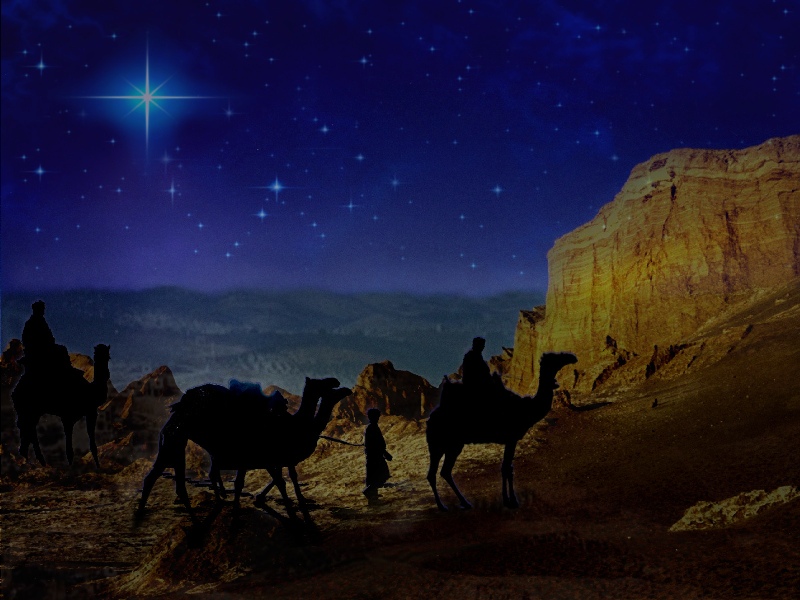
Every human person will find meaning in life by being open to God.  The Three Kings, were not Jewish, they came from the Orient.  Some scholars believe that they began their travels together from Persia, while others believe that they came from three different regions of the Orient, one of them maybe even being China.

Obviously, the Magi were not part of the chosen people.  They were not Jews.  They were part of the vast populace of people extended throughout the known world at that time who were called pagans, or gentiles. 

The Three Kings of this Sunday’s gospel narrative are men who are left unsatisfied by their possessions of wealth, fame and power, and search for the only one who can satisfy the deepest aspirations of the human heart.  They longed to find the very meaning of their existence.  

After a long and difficult search, they discover the place where he lays, and they encounter the One who has come to redeem us and fulfill our intense longings.  They know who he is because they bring him the most appropriate gifts:  gold for a king, frankincense for a priest, and myrrh for a victim.  They know that he is the Messiah, Jesus the Christ, the only one through whom salvation can be found.

Because the Three Kings were open, they were given the gift of faith.  Through this gift they searched, they found, and they believed.      

Certainly today, one of the most blinding obstacles to the search for meaning and truth is secularism. 

Secularism only concerns itself with the here and now.  It has no use for matters regarding the existence of God, the immortality of soul, or the eternal destiny of man.   

Not all secularists are atheists, but many are, while others are agnostics.  Without a doubt, secularism is only one-step away from complete atheism.

The secularist passionately seeks human progress without any reference to the spiritual dimension of the human person.  The secularist is only concerned with this life and has no concern with religion.  In fact, the secularist attempts to experience human satisfaction through involvement in seemingly noble enterprises that are in essence missing the total picture of man’s true needs. 

Secularism keeps us from searching for God; it keeps us from finding true meaning in life.  Historically, the Catholic Church has never had to deal with secularism until the arrival of our modern age.  Secularism and paganism are very different indeed.

The pagan believes in the transcendent.  The pagan has an understanding that there is an afterlife and the soul is immortal.  The pagan also lives by a moral code that has its roots in divine law.  Nevertheless, for the secularist, there is no God, no eternal life, and morality is arbitrarily contrived without any reference to God. 

The mission of the Church in the secularist world is very difficult indeed simply because the pagan is much more open to truth and can be easily converted, whereas the secularist is usually as hard as a rock. 

Catholics need to be aware of secularism and not allow it to affect their lives.  However, many Catholics have been poisoned by this pervasive system of thought. 
Sometimes the secularist opens up to the true meaning of life through some terrible tragedy such as a dreadful sickness or even death itself.  However, many times the secularist is so closed off to the transcendent that no movement toward God is even possible.

Interestingly, it is noteworthy to observe the pervasive apathy among so many people, even Catholics who attend church on a regular basis.  Could apathy be a practical fruit of secularism?

If our focus is only on the here and now, it is very easy to look upon anything spiritual with a big “so what.”

USA TODAY addressed this problem around Christmas time with a very interesting article about the spirit of apathy in our modern society. 

According to the article, “44% told the 2011 Baylor University Religion Survey they spend no time seeking ‘eternal wisdom,’ and 19% said ‘it's useless to search for meaning.’

46% told a 2011 survey by Nashville-based evangelical research agency, LifeWay Research, they never wonder whether they will go to heaven.

28% told LifeWay ‘it's not a major priority in my life to find my deeper purpose.’  And 18% scoffed at the idea that God has a purpose or plan for everyone.

6.3% of Americans turned up on Pew Forum's 2007 Religious Landscape Survey as totally secular — unconnected to God or a higher power or any religious identity and willing to say religion is not important in their lives.”

When Jewish psychiatrist Victor Frankl was arrested by the Nazis in World War II, he was stripped of all of his personal possessions.  He had spent years researching and writing a book on the importance of finding meaning in life--concepts that would later  become known as logotherapy. When he arrived in Auschwitz, the infamous death camp, even the manuscript hidden in the lining of his coat was taken away.

"I had to undergo and overcome the loss of my spiritual child,” Frankl wrote. "Now it seemed as if nothing and no one would survive me; neither a physical nor a spiritual child of my own! I found myself confronted with the question of whether under such circumstances my life was ultimately void of any meaning."

He was still wrestling with that question a few days later when the Nazis forced the prisoners to give up their clothes.

"I had to surrender my clothes and in turn inherited the worn-out rags of an inmate who had been sent to the gas chamber," said Frankl. "Instead of the many pages of my manuscript, I found in the pocket of the newly acquired coat a single page torn out of a Hebrew prayer book, which contained the main Jewish prayer, Shema Yisrael (Hear, O Israel! The Lord our God is one God. And you shall love the Lord your God with all your heart and with all your soul and with all your might.)

"How should I have interpreted such a 'coincidence' other than as a challenge to live my thoughts instead of merely putting them on paper?"

Later, as Frankl reflected on his ordeal, he wrote in his book, Man's Search for Meaning, "There is nothing in the world that would so effectively help one to survive even the worst conditions, as the knowledge that there is a meaning in one's life . . .'He who has a why to live for can bear almost any how.'"

Thornton Wilder’s famous novel, The Bridge of San Luis Rey, ends with these words: “There is a land of the living and a land of the dead and the bridge is love, the only survival, the only meaning.”

Love is the why

And behold, the star that they had seen at its rising preceded them, until it came and stopped over the place where the child was.  They were overjoyed at seeing the star, and on entering the house they saw the child with Mary his mother” (Matthew 2: 10-11). 

The quest of the Magi reminds us that God is truly with us.  Sometimes during our journey, clarity disappears and we begin to doubt.  Let us remember that Jesus is always with us.  He is Emmanuel, God with us.  Like the shining star, he is present in the tabernacle, just as he was present in the manger of Bethlehem. 

The Solemnity of the Epiphany is not only about three wise men that visited the manger.  Instead, this Biblical event speaks to us about the plan of God for the entire human race.  “Lord, every nation on earth will adore you.”  

The audio podcast will be posted Sunday afternoon.


Friday, December 30, 2011

Mary, The Mother of God - Theotokos


Today we celebrate the beautiful solemnity of Mary, Mother of God.  In reality, this solemnity allows us to reflect upon the essential reality of our Catholic Faith: Jesus, the Christ, is one person with two distinct natures: divine and human.  This union of the two natures in the one person of Jesus is called the hypostatic union. 


Thus, the Church, at the Council of Ephesus (431 AD) defined Mary as the Theotokos, the Mother of God. 

“Called in the Gospels ‘mother of Jesus,’ Mary is acclaimed by Elizabeth, at the prompting of the Spirit and even before the birth of her son, as ‘the mother of my Lord.’  In fact, the One whom she conceived as man by the Holy Spirit, who truly became her Son according to the flesh, was none other than the Father’s eternal Son, the second person of the Holy Trinity.  Hence, the Church confesses that Mary is truly ‘Mother of God’ (Theotokos)” (Catechism of the Catholic Church, 495). 

A long period of tumultuous theological controversies surrounded the question of Jesus’ divine and human natures, and how the role of Mary was to be understood.  People like Arius and Nestorius were infamous proponents of heterodox Christological teachings. 

By studying the history of the first four Ecumenical Councils of the Catholic Church (Nicea, Constantinople, Ephesus, and Chalcedon) we can better understand the significance of today’s celebration. 

Aside from the theological and historical significances, I would like us to enter the mystery of the Theotokos by looking at this mystery through the eyes of Saint Joseph. 

What did he see as he pondered all that was happening to Mary? 

During this past Advent, a priest friend of mine brought my attention to a fascinating reflection on the Gospel of Matthew in the Ignatius Catholic Study Bible

Why did Joseph want to divorce Mary?   The answer to this question, in my view, gives us a glimpse as to how Joseph considered Mary, the Theotokos.

But, before we can consider the question of the divorce, we need to understand what it means in the Sacred Scriptures that Joseph and Mary were betrothed.  

A betrothal in the ancient Jewish world was not the same as our contemporary understanding of an engagement. 

Betrothal was a period of time, usually up to one year, before the actual covenant of marriage took place.  Although a couple would not live together, they were considered to be married.  Thus, a betrothal could only be ended by divorce or death. 

“This is how Jesus Christ came to be born.  His mother Mary was betrothed to Joseph; but before they came to live together she was found to be with child through the Holy Spirit.  Her husband Joseph, being a man of honour and wanting to spare her publicity, decided to divorce her informally” (Matthew 1: 18-19).

So, let us go back to the question as to why Joseph decided to end his marriage with Mary. 

There are two theories proposed by the Ignatius Catholic Study Bible. 

First, there is the suspicion theory.  “This view holds that Joseph suspected Mary of adultery when he discovered she was pregnant.  The troubling news led him to seek a divorce in accordance with Deuteronomy 24: 1-4, although he wished to do this secretly to avoid subjecting Mary to the rigorous law of Deuteronomy 22: 23-24, which mandates capital punishment for adulterers” (page 18).

Second, there is the reverence theory.  “This view holds that Joseph, already informed of the divine miracle within Mary, considered himself unworthy to be part of God’s work in this unusual situation.  His resolve to separate from Mary is thus viewed as a reverent and discretionary measure to keep secret the mystery within her” (page 18).

My dear friends, when I discussed this with my priest friend over lunch, “the reverence theory” certainly had what we might call the “wow effect.”  We had never thought of “the reverence theory” and it makes perfect sense.  How beautiful!

“Joseph son of David, do not be afraid to take Mary home as your wife, because she has conceived what is in her by the Holy Spirit.  She will give birth to a son and you must name him Jesus, because he is the one who is to save his people from their sins” (Matthew 1: 20-21).

Reverence and awe: like Saint Joseph, this is how we are to treat the Christmas mystery and all of the mysteries of our Catholic Faith. 

Do we treat Mary with reverence and awe? Let us ask Saint Joseph to show us how to do this.  How do we pray the Rosary?  How do we cherish and celebrate her feast days?  Do we please her and honor her by the way we live our lives?

Do we treat Jesus with reverence and awe?  Let us ask Saint Joseph to show us how to do this.  How do we receive Holy Communion?

“Domine, non sum dignus, ut intres sub tectum meum: sed tantum dic verbo, et sanabitur anima mea.  Lord, I am not worthy that you should enter under my roof, but only say the word and my soul shall be healed” (Roman Missal, Third Edition).


In an age where the banal and the crass are the order of the day, let us turn to Saint Joseph and ask him to teach us how to treat the things of God with a renewed sense of mystery, reverence and awe.  


Thursday, December 22, 2011

Christmas and the Language of God


In Africa, a tale is told of a boy called Amazu, who was always very inquisitive. One day he asked, “What language does God speak?” But no one could answer him.  He traveled all over his country questioning everyone but could not get a satisfactory answer. Eventually he set out for distant lands on his quest. For a long time he had no success.

At length, he came one night to a village called Bethlehem, and as there was no room in the local inn, he went outside the village in search of shelter for the night. At last he came to a cave and found that a couple and a child also occupied it. He was about to turn away when the young mother spoke, “Welcome Amazu, we’ve been waiting for you.”

The boy, amazed that the woman knew his name, was even more amazed when she went on to say, “For a long time you have been searching the world over to find out what language God speaks. Well, now your journey is over. Tonight you can see with your own eyes the language God speaks. He speaks the language of love.”

And so each Christmas we contemplate the mystery of our God who became man. He is born in silence, poverty, simplicity and purity in Bethlehem, the house of bread.  Our God made man later taking bread and wine transforms it into his body and blood; thus is the mystery of his Incarnation continued for us in the mystery of the Eucharist, God made real for us.  God becomes man. Bread and wine becomes God-man. Each time we come to the Eucharist, we come to a new Bethlehem.  He, who rested once in a manger, now rests in our entire being, as we receive him in the mystery of the Mass.

Long ago, there ruled in Persia a wise and good king who loved his people. He wanted to know how they lived, and he wanted particularly to know about their hardships. Often dressed in the clothes of a worker or a beggar, he visited the homes of the poor. No one whom he visited even thought he might be their ruler.

Once he visited a very poor man who lived in a cellar. He ate the coarse food the poor man ate, and he spoke cheerful, kind words to him. Then he left. Later when he visited the poor man again, he disclosed his identity saying, "I am your king!" Then the king thought the man would surely ask for some gift or favor, but he did not. Instead, he said, "You left your palace and your glory to visit me in this dark, dreary place. You ate the course food I ate. You brought gladness to my heart! To others you have given your rich gifts. To me you have given yourself!"

This is the true meaning of Christmas.  The second person of the Blessed Trinity becomes incarnate.  Jesus is true God and true man.  He is one person with two natures, a divine nature and a human nature. 

Had our greatest need been knowledge, God would have sent us an educator.  Had that greatest need been technology, God would have sent us a scientist.  So too had our greatest need been for money, God would have sent us an economist.  Had our greatest need been for pleasure, God would have sent us an entertainer. Because our greatest need was for forgiveness, God sent us a Savior.

All of us are familiar with the character of Ebenezer Scrooge depicted in Charles Dickens famous novel, A Christmas Carol, or we have come to know of him through movies and television specials aired during the Christmas season.

Ebenezer Scrooge is completely self-absorbed.  He is resentful of the demands made upon him by those who are poor and less fortunate.

Scrooge, a tragic figure indeed, is visited by three spirits: the spirit of Christmas past, the spirit of Christmas present and the spirit of Christmas future. 

The dramatic journey elicits his repentance. He becomes aware of his past indifference and cruelty and is moved to be more generous and benevolent toward those he had been mistreating in the past. 

Through a profound catharsis, Ebenezer Scrooge learned how to live for others and not only for himself. By breaking the circle of his ego, he had enabled the light of Christianity to invade his soul and change him into a new man filled with joy and hope.

We all have wonderful memories of how we have celebrated Christmas in the past.  On this Christmas, we will relive those memories, create new ones, and cherish our fondest memories in the recesses of our hearts.

The joy and excitement of opening Christmas presents; sampling the delicious foods and deserts that our mothers and grandmothers had prepared; the decorating of the tree; the setting up of the manger scene; the singing of Christmas carols; and of course, the gathering together of family members and friends, all make up the wonderful memories of Christmas.  

I have many beautiful memories of Christmases past.  From early childhood, I remember how our entire family always attended Christmas morning Mass at our parish.  Inevitably, somewhere along in the liturgy, the choir would sing Silent Night

As the beautiful hymn filled the church with harmony, my grandmother would begin to weep uncontrollably.  Once, as a child, I asked my grandmother why she wept so much. "God loves us so much," was her immediate answer. 

This Christmas memory of my grandmother fills me with sadness at times, but then I remember how she died a few years ago.  As she lay in bed taking her last breath, she said, "Dear God, I love you.”   I am sure that now in heaven she contemplates the eternal face of the God made man born in Bethlehem. 

There is another Christmas memory that fills me with profound joy, the memory of the first time that I celebrated the Holy Sacrifice of the Mass as a newly ordained priest.

Yes, I was given the amazing privilege of celebrating my first Mass on Christmas morning after having received the inestimable gift of the Catholic priesthood on December 24, 1987.   

My family and friends gathered together with me in Rome at a beautiful basilica dedicated to our Blessed Mother, as I celebrated my first Mass at an altar containing relics from the manger of Bethlehem.

Most of our memories of Christmas are beautiful indeed; however, many of us may indeed have memories of a Christmas past permeated with sadness, times of difficulty and distress. However, Jesus, the God of love will surely come to us in our grief and fill us with his consolation and peace. 

“The people who walked in darkness have seen a great light; upon those who dwelt in the land of gloom a light has shone.  You have brought them abundant joy and great rejoicing, as they rejoice before you as at the harvest, as people make merry when dividing spoils” (Isaiah 9: 1-2).

The tribulations of the here and now can be met with a profound sense of joy because we are convinced of the One whom we have come to know through the gift of faith.

True disciples of Christ live in the present with joy because they have experienced the forgiveness of past sins.  Like oil and water, joylessness and Christianity do not mix.  Despite the many challenges of the present, true disciples can look forward to the Christmases of the future with intense hope. 

Christmas is the celebration of the birth of our redeemer.  Within the beauty of our Christmas festivities, we must remember that Christmas is about the terrible reality of sin.  The wood of the manger made way for the wood of the cross.  Jesus came into this world to save us from sin.

“Joseph, son of David, do not be afraid to take Mary your wife into your home.  For it is through the Holy Spirit that this child has been conceived in her.  She will bear a son and you are to name him Jesus, because he will save his people from their sins” (Matthew 1: 20-21)

If we live as autonomous beings as though God does not exist, if we immerse ourselves in the murky mist of blinding secularism, we will be unable to recognize our need for a Savior simply because we will be incapable of recognizing ourselves as sinful creatures needy of redemption.
         
Christmas is all about the Savior who came to save us from sin.  We need to open our minds and our hearts, and allow this Savior to possess our entire being.

“I proclaim to you good news of great joy; today a Savior is born for us, Christ the Lord” (Alleluia, Mass at Midnight).

English speaking peoples say Merry Christmas.  The Spanish speakers say Feliz Navidad.  Filipinos say Maligayamg Pasko.  In Korea, people say Sung Tan Chuk Ha.  The French say Joyeux Noel and the Portuguese say Boas Festas and the Italians say Buon Natale.  

Whatever language we may speak as we contemplate the Christ child lying in the manger of Bethlehem, God speaks only one language and that language is the language of love.


Thursday, December 15, 2011

The Fourth Sunday of Advent - Mary and the Mystery of the Incarnation


Christmas is almost here. As the fourth candle of the advent wreath is lit, we are reminded that we need to intensify our spiritual preparation for the anniversary of the birth of our Savior.
 
The external aspects of our Christmas celebration only make sense if we keep our attention fixed on who it is that we are celebrating. Christmas is the birthday of Jesus.
 
This Sunday's gospel passage focuses our attention on the one central reality of Christianity: that the Word, the second person of the Blessed Trinity, became man and dwelt among us. On the last Sunday of Advent, the Church allows us to contemplate this reality through Mary, the Mother of Jesus.

Often when we attempt to get to know someone, it is always very helpful to know the person's mother. Fr. Romano Guardini once wrote: "Anyone who would understand the nature of a tree, should examine the earth that encloses its roots, the soil from which its sap climbs into branch, blossom and fruit. Similarly, to understand the person of Jesus Christ, one would do well to look to the soil that brought him forth: Mary, his mother (The Lord, p. 10).
 
Mary is a young, beautiful, pure and humble woman chosen before the beginning of time to be the Mother of the Incarnate Word. This calling is announced to her by the Angel Gabriel who appears to her. Mary, although she has been chosen, could have said no to God's will; however, it is her profound love of God that allows her to say yes unconditionally. "Behold, I am the handmaid of the Lord. May it be done to me according to your word" (Luke 1: 38).

It is clear that the mysteries of the Annunciation and the Incarnation indicate man's relationship with God. God is our creator and our relationship with him is through obedience to his will. The Blessed Virgin Mary is the most perfect embodiment of this relationship between God and man. Through faith, she listens to the voice of God and freely submits her entire being to the plan of God over her life. The word obey comes from the Latin ob-audire which means to hear or listen to. It is Mary's faith, humility and simplicity that allow her to listen to God and to put his plan into practice.

Faith is our response to God. By the act of faith, we completely submit our intellect and our will, in fact, our entire being to God. This act of submission is rooted in love and freedom. The gift of faith allows us to experience already here on earth the promise of the beatific vision, although in an imperfect way. Mary is the perfect model of someone who correctly lived out to its ultimate consequence the obedience of faith. This is why Saint Augustine once wrote, "Mary is more blessed because she embraces faith in Christ than because she conceives the flesh of Christ."

Nevertheless, sometimes people seem to have difficulty identifying with the example of the faith and fidelity of Mary. They have the impression that everything was very easy for Mary because she was conceived without original sin.

Not everything was clear for the Blessed Virgin Mary. Just as in any manifestation of the divine, there is always a profound moment of light followed by long and trying times of darkness. Mary was enveloped in the light of God's presence during the Annunciation. However this brilliance of clarity was followed by the night of faith. She fulfilled her unconditional yes within the many trials and difficulties of her journey towards eternity.

Mary's fidelity was heroic because her faith was heroic. In fact, as Romano Guardini writes, "Her faith was greater, more heroic than that of any other human being" (The Lord, p. 13).

After the Annunciation and the conception of Jesus in her womb, a series of terrible trials began. First of all Joseph did not understand what was happening to Mary, and she had to cling to the promise that had already been made to her by the angel Gabriel: "The Holy Spirit will come upon you, and the power of the Most High will overshadow you. Therefore the child to be born will be called holy, the Son of God". The trial did not come to an end until Joseph received his instructions in a dream: "Joseph son of David, do not be afraid to take Mary home as your wife, because she has conceived what is in her by the Holy Spirit" (Matthew 1: 20).

As the first Christmas quickly approached, another trial came about because there was no room for Mary and Joseph in the inn. Where would the child be born? Eight days after his birth, Simeon foretold the suffering that would always accompany Mary: "…and a sword will pierce your own soul too…"(Luke 2: 35). Soon after these words were spoken, the Holy Family was forced to leave their home in order to escape the evil intentions of Herod. But, when they returned to Nazareth, Mary continued believing during the long years of Jesus' hidden life, without ever seeing any miracles at all.

However, her greatest trial of all was Our Lord's passion. She did not run away like the others had done. She stood at the foot of the cross and continued to be heroically obedient because of her heroic faith.

Fidelity is an austere virtue. Fidelity demands self-knowledge, generosity, sacrifice and a lot of courage. Mary is our model of fidelity. The daily struggle and the failures can be overwhelming at times. But, fidelity is an adventure, and the "good fight" is exhilarating. As time goes on, we can become weary of the battle. Personally, I believe it is far better to drag an exhausted body and spirit through the difficulties of life, rather than to give in to the promptings of the flesh which make us yearn for an easier life. Rather than to give in to the sirens of comfort, I prefer to hear these words from my Lord at the moment of death: "I know too that you have perseverance, and have suffered for my name without growing tired" (Revelation 2: 3).

I have much for which to thank the Blessed Mother. Throughout my life she has always been close to me, even though at times I have not always been the attentive son I should have been. As December 24th, the 24th anniversary of my priestly ordination quickly approaches, I give thanks to my Blessed Mother who has been intimately present in my vocation to the priesthood.

Back in 1975, I discovered my calling after the recitation of the evening Rosary at Magdalen College. On December 24, 1987, the Marian Year proclaimed by Blessed Pope John Paul II, my ordination took place in Rome, under the maternal gaze of Our Lady of Guadalupe. On the morning of December 25, surrounded by a small gathering of family and friends, I celebrated my first Mass in the Basilica of Saint Mary Major. It is through Mary, that each day I am able to hold her Son in my trembling hands. I am a happy priest. I love what I do and I thank Mary for the awesome gift of the priesthood.

Twenty-four years ago, the night before my ordination, in a quiet and secluded corner of the seminary where a beautiful image of Our Lady watched over us, I knelt down before her. In the silence of my heart I prayed: Mary, you know who I am and you are with Jesus. You know that he has called me to be his priest. If I am going to be a bad priest, tell your Son to call me tonight to his side, because I do not want to lose him. The next morning as I awoke, I was filled with a profound sense of confidence that Jesus would give me all of the graces that I needed to fulfill my mission as his priest.

Mary, my Mother, has always been there for me. Twenty-four years have been filled with tremendous blessings and great victories for the Kingdom, but they have been accompanied by much suffering and persecutions. Through it all, Mary has always been there to comfort me and urge me on to fulfill my mission until the end. I long to see her one day in heaven. When we embrace and kiss, the suffering of the cross will give way to the bliss of the resurrection.

As we intensify our preparation for the celebration of Christmas, perhaps certain sadness might cloud the joy that is proper to this time of the year. Many are the challenges of our times. The constant attacks of secularism, materialism and hedonism makes it challenging to live authentic Christianity. Many families suffer from many serious difficulties and problems. All of these things attempt to suffocate the gift of faith that has been given to us.
 
It is precisely in difficult and challenging times that we must look to the witnesses of faith. Mary is the greatest of them all. Through her pilgrimage of faith, she walked into the night of faith. Not everything was clear for Mary, but she continued to trust and she continued to obey. She abandoned herself entirely into God's loving and providential care. Full understanding only came to her at Pentecost. It was there that she understood all the things that she had cherished in her heart.
 
As we quickly approach the celebration of the birth of Jesus, let us prayerfully consider these words, again, from Fr. Guardini: "What is demanded of us, as of her, is a constant wrestling in fide with the mystery of God and with the evil resistance of the world. Our obligation is not delightful poetry but granite faith – more than ever in this age of absolutes in which the mitigating spell is falling from all things and naked opposites clash everywhere" (The Lord p. 14).